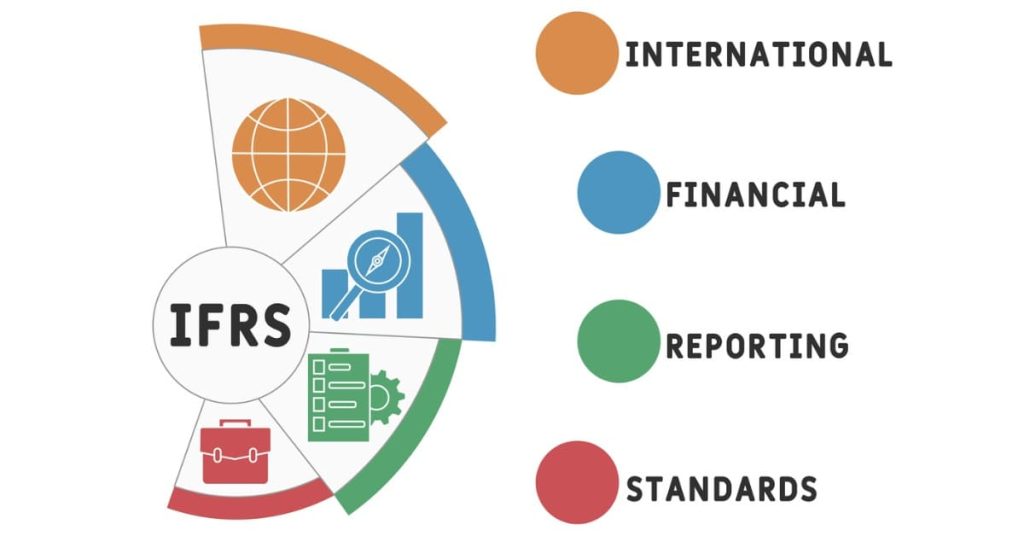
International Financial Reporting Standards (IFRS) serve as a global framework for financial reporting, ensuring consistency and transparency across industries and borders.
Here’s a detailed exploration of the most essential IFRS standards, designed to help even beginners understand their key principles.
IFRS 1 – First-time Adoption of International Financial Reporting Standards
Purpose:
IFRS 1 outlines the procedures for an organization’s initial adoption of IFRS. It sets guidelines for transitioning from previous accounting frameworks to IFRS, ensuring consistency and reducing the shock of change.
Key Points:
- Retrospective Application: This standard requires companies to apply IFRS as if they had always used it, with certain exemptions allowed.
- Exemptions: For instance, companies may not need to restate business combinations that occurred before adopting IFRS.
- Impact: Helps businesses align their financial records with global standards without unnecessary retroactive adjustments.
IFRS 2 – Share-based Payment
Purpose:
This standard provides a framework for accounting for share-based payments, such as stock options, that employees or other parties might receive.
Key Points:
- Equity-settled and Cash-settled Transactions: Companies must recognize the expense for share-based payments over the period they provide the service.
- Valuation of Options: Share options are measured at fair value at the grant date.
- Impact: It improves transparency by recognizing the cost of share-based compensation, which can significantly affect a company’s financial health.
IFRS 3 – Business Combinations
Purpose:
IFRS 3 focuses on how companies should account for business combinations, like mergers and acquisitions.
Key Points:
- Acquisition Method: The acquirer must recognize and measure the identifiable assets, liabilities, and contingent liabilities of the acquired business.
- Goodwill: Any excess purchase price over the fair value of net assets is recorded as goodwill.
- Impact: This ensures that the financial impact of acquisitions is reported fairly, improving comparability across businesses.
IFRS 5 – Non-current Assets Held for Sale and Discontinued Operations
Purpose:
IFRS 5 governs how to account for non-current assets that are held for sale, and for the reporting of discontinued operations.
Key Points:
- Classification as Held for Sale: Non-current assets must be classified as held for sale if their carrying value will be recovered through sale rather than continued use.
- Discontinued Operations: These are operations that have been disposed of or are classified as held for sale, and their results must be reported separately.
- Impact: This standard ensures that investors can clearly see the financial effect of major changes in a company’s structure, improving decision-making.
IFRS 9 – Financial Instruments
Purpose:
IFRS 9 deals with the classification, measurement, and impairment of financial assets and liabilities.
Key Points:
- Classification: Financial assets are classified based on their cash flow characteristics and the entity’s business model for managing them.
- Impairment: A forward-looking model for impairment is introduced, requiring companies to recognize expected credit losses from the initial recognition of a financial asset.
- Impact: It aims to provide more useful financial information about an entity’s financial health and risk exposure, especially regarding credit losses.
IFRS 10 – Consolidated Financial Statements
Purpose:
IFRS 10 outlines the accounting for consolidated financial statements when an entity controls one or more other entities.
Key Points:
- Control Definition: A parent must consolidate a subsidiary if it has control over it, which is defined as the ability to direct the relevant activities of the subsidiary.
- Consolidation Process: All subsidiaries must be included in the consolidated financial statements of the parent, regardless of the percentage of ownership.
- Impact: This standard ensures that the financials of group companies are presented together, allowing for a more accurate picture of the overall financial position of the group.
IFRS 15 – Revenue from Contracts with Customers
Purpose:
IFRS 15 provides a framework for recognizing revenue from contracts with customers in a way that reflects the transfer of goods or services to customers.
Key Points:
- Five-Step Model: Recognize revenue when control of goods or services is transferred to the customer, based on five steps: identifying contracts, performance obligations, transaction prices, allocation, and recognition.
- Impact: It enhances comparability and transparency by ensuring revenue is recognized consistently across industries.
IFRS 16 – Leases
Purpose:
IFRS 16 fundamentally changes lease accounting by bringing most leases onto the balance sheet.
Key Points:
- Lessee Accounting: Lessees must recognize a right-of-use asset and a lease liability for nearly all leases, replacing the operating lease distinction.
- Impact: This provides a clearer picture of a company’s lease obligations, impacting key financial ratios and decision-making.
IFRS 17 – Insurance Contracts
Purpose:
IFRS 17 outlines how insurers should account for insurance contracts, aiming to ensure transparency and comparability.
Key Points:
- Measurement of Liabilities: Insurance liabilities are measured using a current, market-based approach, reflecting the insurer’s obligations to policyholders.
- Impact: This provides a more consistent framework for understanding the financial health of insurance companies.
IFRS ensures consistency and transparency in financial reporting, benefiting both companies and investors.
Each of the standards plays a vital role in shaping how financial transactions are reported and analyzed.
Understanding these standards is crucial for companies, as adopting them enhances comparability, accountability, and investor confidence.
For businesses operating internationally, aligning with IFRS is more than just a regulatory necessity, it’s a strategic decision that helps enhance credibility in global markets, build investor trust, and streamline financial reporting processes.