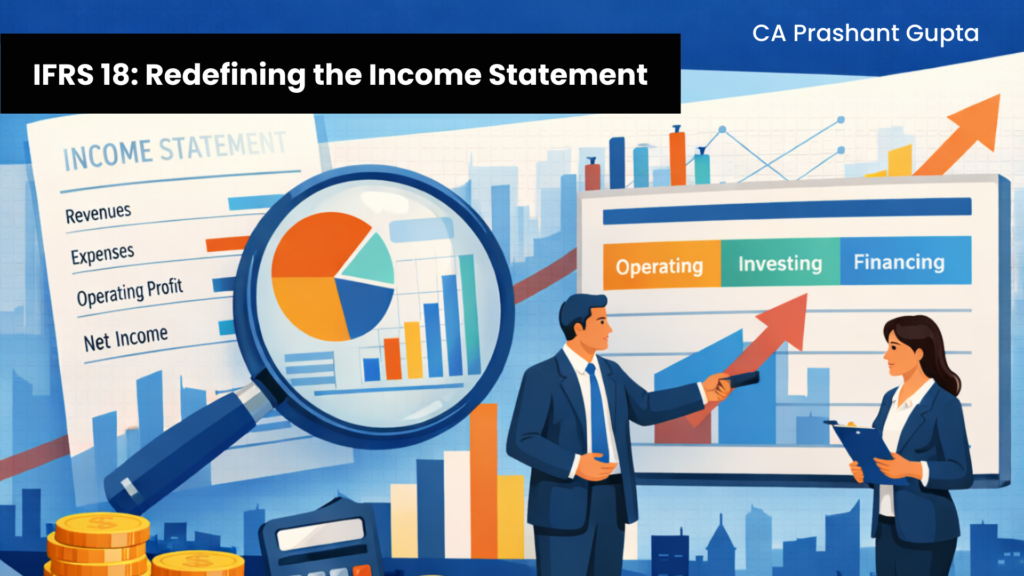
In 2027, financial reporting is getting a major update. The old IAS 1 – Presentation of Financial Statements is being replaced by a brand-new standard called IFRS 18 – Presentation and Disclosure in Financial Statements. This isn’t just a name change it brings some important improvements to how companies present financial information
Why the Change?
IAS 1 has been the backbone of financial statement presentation for decades. But investors and analysts often found companies’ income statements hard to compare because formats varied widely. IFRS 18 aims to fix that by adding clear rules and useful disclosures so financial reports become more transparent and consistent.
1. A More Standardised Income Statement
Under IAS 1, companies had flexibility in how they presented items like revenue, expenses and profit. This often made it difficult to compare one company with another.
IFRS 18 introduces defined categories for the income statement, such as:Operating,Investing, Financing
For the first time, companies must show standard subtotals like
- Operating Profit or Loss
- Profit Before Financing and Income Tax
These subtotals give readers a clearer picture of how a business actually performs
2. Clear Rules for “Management Performance Measures” (MPMs)
Many companies currently show non-standard performance figures like adjusted EBITDA or other custom totals outside the core financials. Under IFRS 18, if a company uses these management-defined performance measures, they must:
- Clearly explain what they mean
- Show how they are calculated
- Reconcile them back to official IFRS figures
This means those popular performance metrics become more transparent and dependable
3. Better Grouping and Breakdown of Items
IFRS 18 also gives more guidance on how to group and break down items in financial statements. The aim is to make sure similar items are presented consistently, avoid confusion, and help readers find relevant information more easily.
4. What Doesn’t Change
Importantly, IFRS 18 doesn’t change the rules for measuring or recognising revenue, expenses, assets or liabilities. Instead, it simply changes how results are presented and disclosed so that users like investors, analysts and lenders can understand them better.
5. When It Applies
IFRS 18 will be mandatory for annual reporting periods beginning on or after 1 January 2027. Entities must also restate comparative figures (e.g., the prior year’s income statement) under the new format. Early application is allowed but must be disclosed
In Simple Words: What You’ll Notice
• Statements will look more structured and consistent across companies.
• Important profit figures (like operating profit) become mandatory and comparable.
• Non-standard measures (like custom profitability metrics) will be explained and audited.
• Financial statements will become more transparent and easier to analyse.
• You won’t see changes in what is reported, only how it’s shown.
Conclusion
The shift from IAS 1 to IFRS 18 is one of the biggest changes in financial statement presentation in years. It’s designed to reduce confusion, improve comparability between companies, and give users better insights into performance. While the core accounting rules haven’t changed, companies will need to rethink how they display and explain financial results.