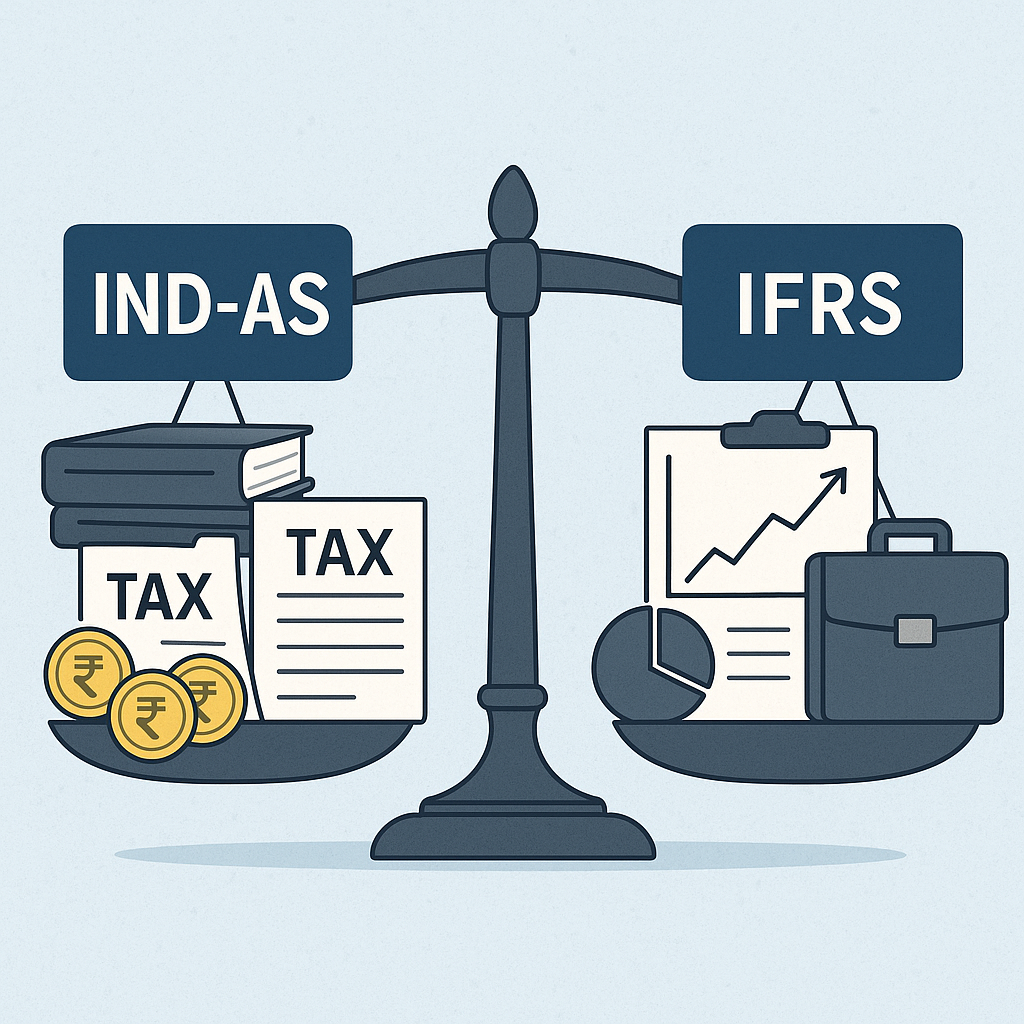
Most companies view accounting standards as a box to check—a regulatory hurdle rather than an opportunity.
But what if IND-AS and IFRS were more than just compliance frameworks?
What if they were hidden tools for smarter decision-making, stronger financial planning, and sustainable business growth?
The real question isn’t whether these standards are necessary.
The real question is: Are companies leveraging them to their full potential?
A Catalyst for Smarter Financial Decisions
IND-AS and IFRS bring more than just standardization; they introduce a structured way of thinking about a company’s financial health.
Data-Driven Strategy: With precise financial reporting, businesses gain access to accurate data that can fuel strategic decision-making. Leaders can identify trends, assess risks, and optimize operations based on real numbers rather than assumptions.
Risk Mitigation: These standards help businesses spot financial red flags before they turn into crises. By enforcing transparency, they allow companies to detect inefficiencies, prevent financial misstatements, and ensure better governance.
Efficiency Beyond Compliance
Companies forced to align with IND-AS and IFRS often streamline their internal processes.
But what if this reorganization isn’t just about compliance but about making businesses more efficient?
Operational Discipline: Implementing these frameworks requires companies to refine their reporting structures, leading to greater accountability at every level. This structured approach prevents financial ambiguity and ensures long-term sustainability.
Cost Savings: Standardized reporting minimizes errors and redundancies, reducing compliance-related costs in the long run. Businesses that adopt these measures proactively often discover ways to optimize expenses and increase profitability.
A Game-Changer for Global Expansion
For businesses with international ambitions, compliance with IND-AS and IFRS isn’t just a necessity; it’s a competitive edge.
Attracting Investors: Transparency breeds confidence. Investors are more likely to back a business that adheres to global financial standards, knowing they can trust the numbers presented to them.
Seamless Cross-Border Operations: Companies looking to expand beyond India find it easier to collaborate with global partners when their financial statements align with internationally accepted norms. This ensures smoother mergers, acquisitions, and joint ventures.
Shaping Leadership and Accountability
A company’s leadership is often tested by how well it adapts to change. IND-AS and IFRS don’t just shape financial reporting; they influence leadership styles and corporate governance.
Informed Decision-Making: When leaders have access to precise financial insights, they can make more calculated business moves. Whether it’s a major investment, a cost-cutting measure, or a strategic pivot, decisions become more fact-based and less speculative.
Stronger Ethical Standards: Compliance with these frameworks fosters a culture of transparency and accountability. Executives and financial teams must ensure not just adherence but integrity in reporting, reinforcing trust within the organization and beyond.
A Competitive Advantage, Not Just a Requirement
Businesses that merely comply with IND-AS and IFRS miss the bigger picture. These standards aren’t just regulations; they’re powerful tools that, when used correctly, can drive growth, efficiency, and long-term success.
The Bottom Line?
Companies that treat IND-AS and IFRS as a burden remain stuck in survival mode. But those who embrace them as strategic advantages position themselves ahead of the competition, equipped with stronger decision-making, financial clarity, and global credibility.
The choice is simple: Compliance for the sake of it? Or compliance as a stepping stone to something bigger?